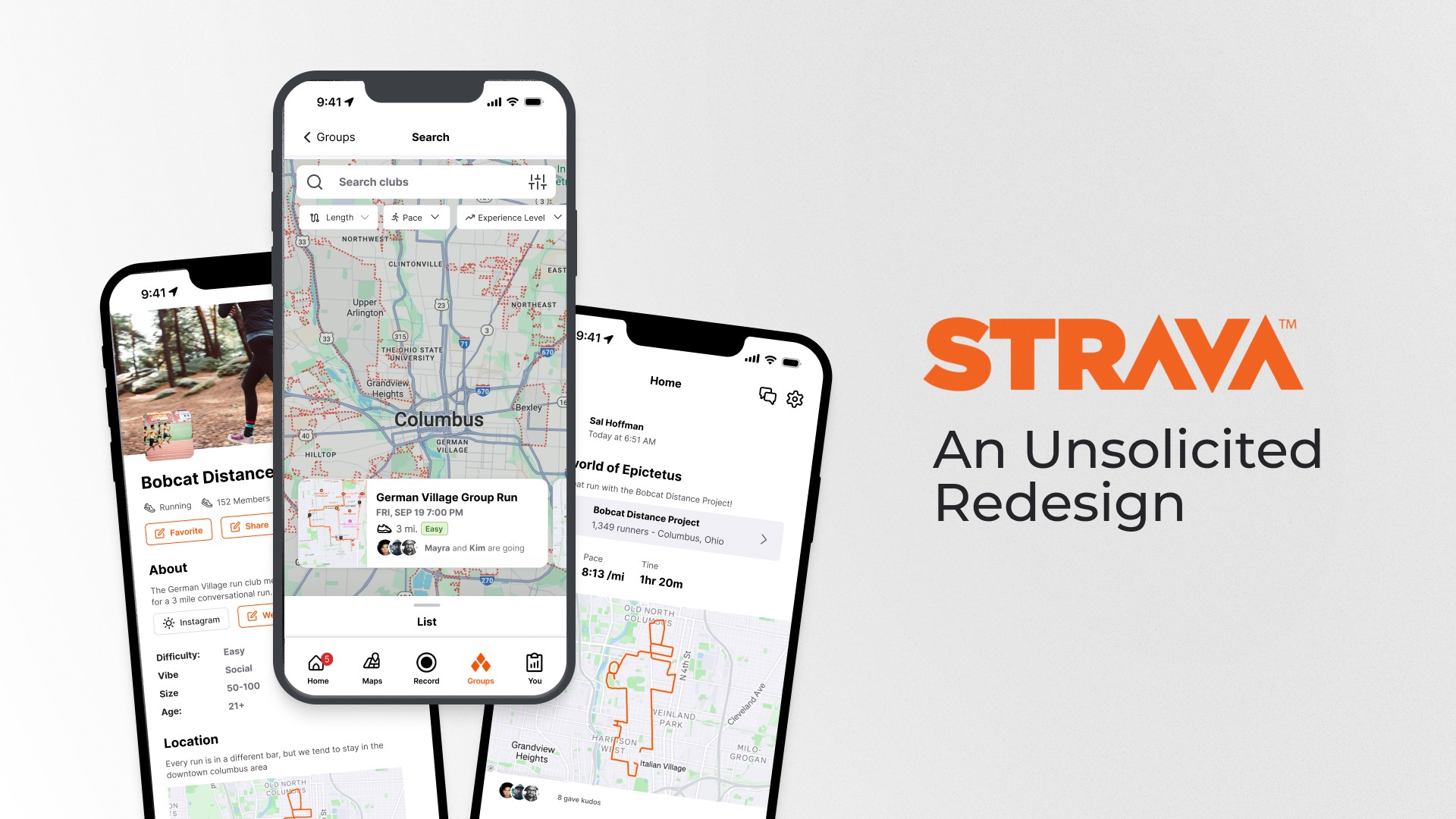
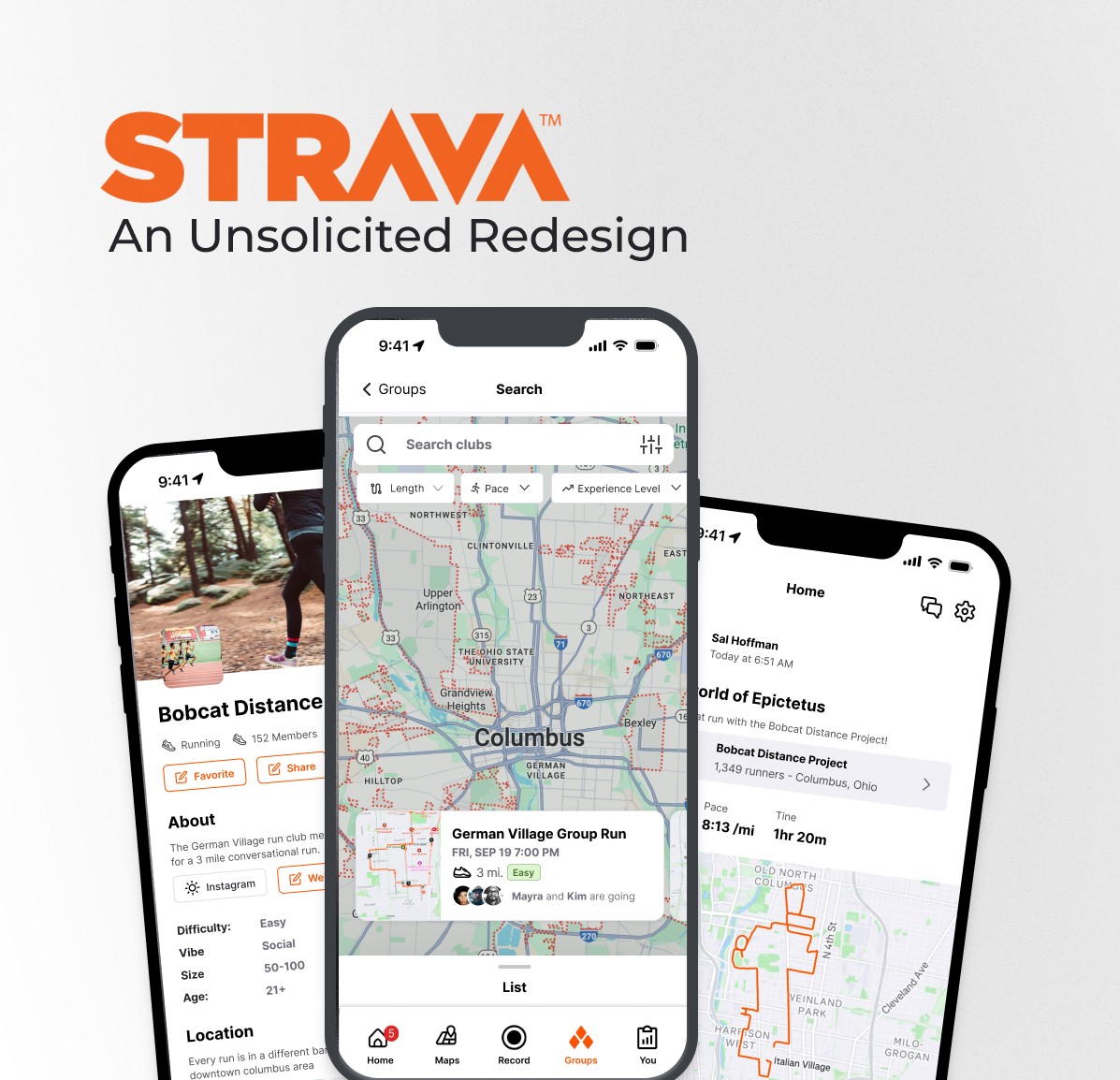

Strava: An Unsolicited Redesign
NOTE: This is a UX Design focused case study, showcasing my skills with creating design systems and interactive prototypes. For a more in-depth research case study, check out Targeted Email
Project Overview
Strava enables athletes to track activities and connect with others, but discovering and committing to a local run club can be intimidating, especially if you are a solo runner.
As a runner and a designer, I wanted to reimagine how runners can discover clubs, understand events, and re-engage after participating, with a focus on reducing uncertainty and improving continuity across the experience.
ROLE
UX Designer
TIMELINE
Sept. 2025
Approach
Mapped the full journey of a solo runner from discovery through post run re-engagement
Identified usability gaps around discovery, uncertainty, and continuity
Audited the existing Strava app and created a lightweight design system to ensure consistensy and scalability across all new screens
Created interactive prototypes in Figma
Understanding The Problem Space
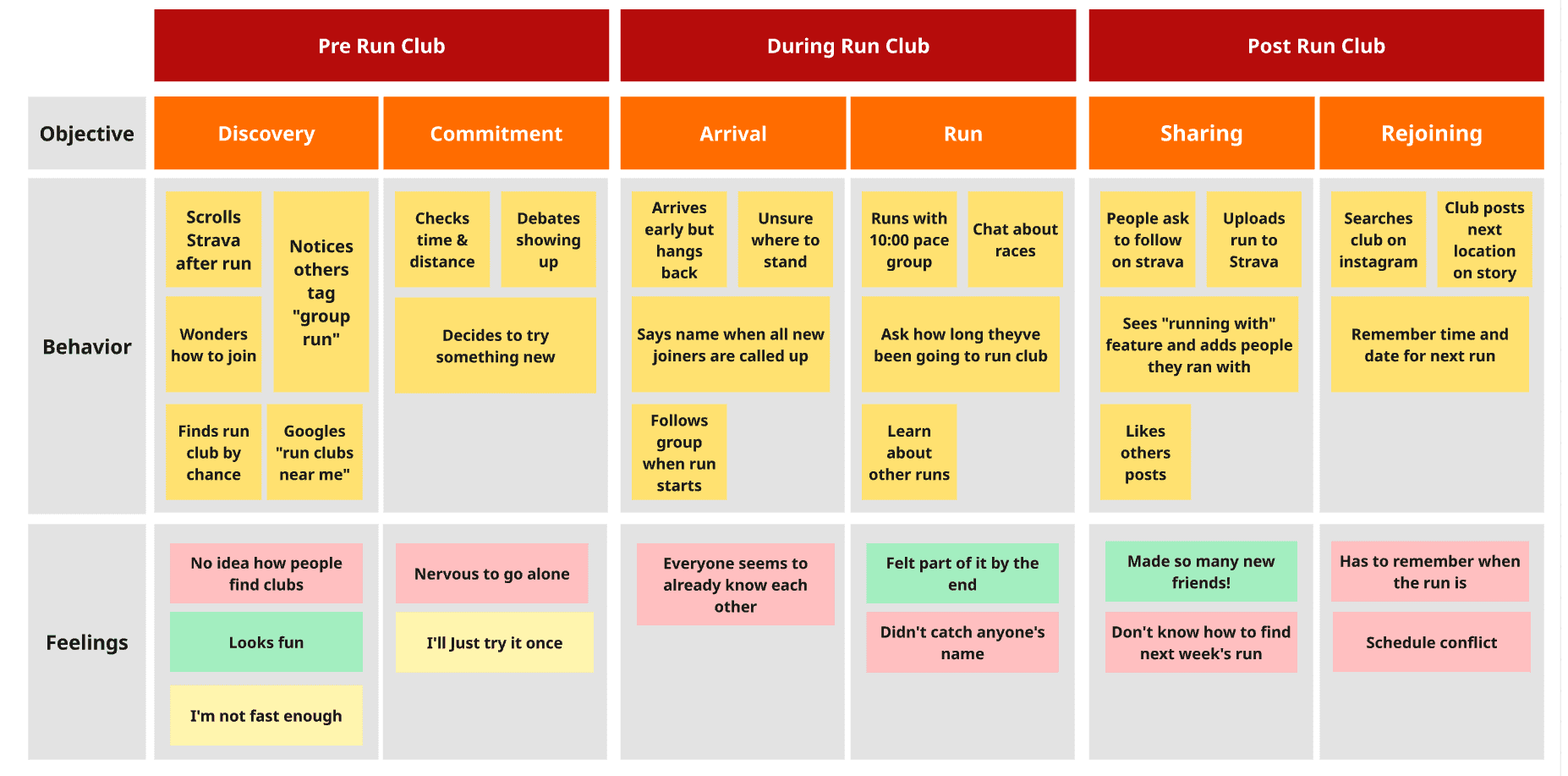
To ground the redesign, I mapped the end-to-end journey of a solo runner across three phases:
Before the run: discovery and decision making
During the run: arrival and participation
After the run: reflection and re-engagement
This helped surface emotion friction alongside usability issues.
Uncovering Pain Points
1: Runs Are Hard To Find
Group runs are buried within club pages and arent surfaced quickly.
Opportunity:
Increase findability of run club runs and highlight nearby and reoccurring events in the home feed that match the users pace.
2: Runners Lack Confidence Before Committing
Runners don't know what pace to expect, what the group vibe is, or if they'll fit in.
Opportunity:
Provide clearer signals: pace, distance, vibe, and club context, before asking runners to commit.
3: Weak Connection Between Runs and Clubs
After a run is completed, there's little enforcement of the club behind the experience
Opportunity:
Create persistant connections between runs and clubs to encourage exploration and repeat participation
Creating A Design System
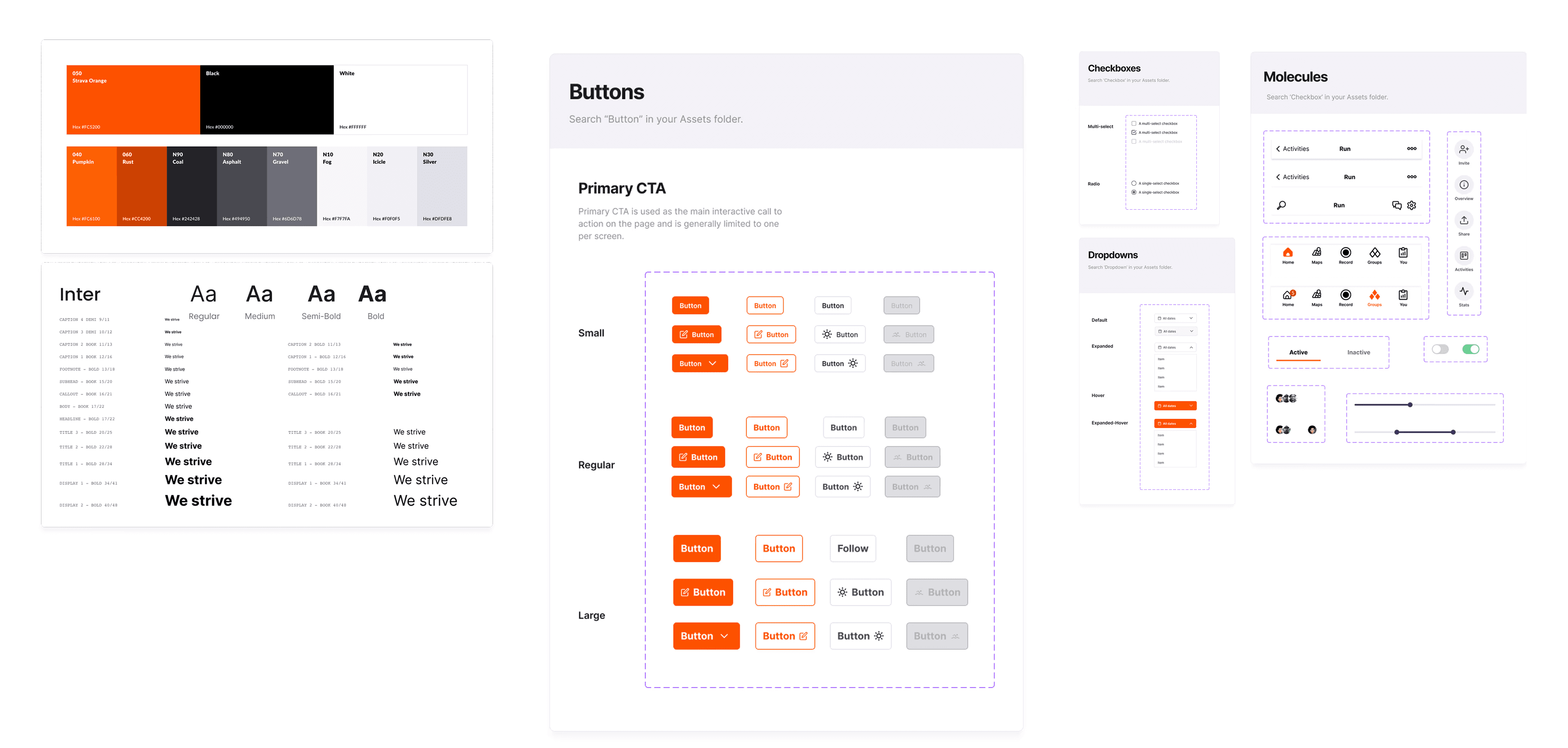
Before designing new flows, I audited the existing Strava app and created a lightweight design system to ensure consistency across all screens.
This included:
Foundations (color, typography, spacing)
Global components
Club and Event
The Solution
Enhanced Search
I redesigned the Club Search experience to reduce uncertainty before a runner's first event by introducing filters such as:
Distance
Pace
Vibe
This allows runners to quickly find clubs that match how they actually want to run.
Reflection
This project gave me the opportunity to deeply examine Strava's UI and understand the design decisions behind a mature, interaction-heavy product. Deconstructing existing patterns and rebuilding them helped me develop a stronger appreciation for the complexity required to support seemingly simple user flows.
While this began as a side project to strengthen my Figma and prototyping skills, it quickly became an exercise in problem-solving and systems thinking. Many interactions required multiple iterations to get right. pushing me to work through motion and state management. Those challenges reinforced the importance of thoughtful interaction design and the level of rigor needed to produce polished, scalable experiences.